Effects of Dietary Menthol on Performance, Physiological Indices, Nutrient Utilization, and Meat Composition of Broiler Chickens Exposed to Cyclic Heat Stress
Keywords:
Heat-Stress Response; menthol; broiler chickens; tropical conditions; physiological stress; nutrient digestibilityAbstract
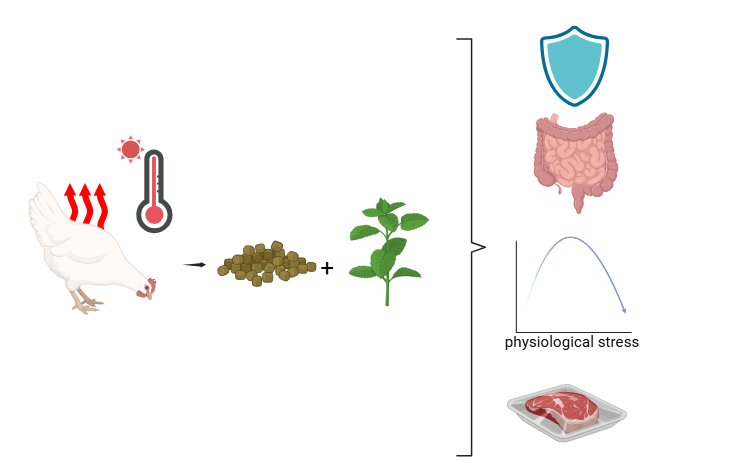
Heat stress is a major challenge to poultry health and productivity in tropical and subtropical regions, necessitating effective nutritional interventions. This study evaluated the effects of dietary menthol supplementation on growth performance, nutrient digestibility, physiological responses, and carcass traits of broiler chickens reared under chronic cyclic heat stress. Ninety Ross 308 broiler chicks (7 days old; initial body weight, 143–146 g) were randomly allocated to three dietary treatments: a basal control diet or the basal diet supplemented with menthol at 50 or 100 mg/kg. Each treatment consisted of five replicates with six birds per replicate, and the trial was conducted from day 7 to day 35 under chronic heat-stress conditions with ad libitum access to feed and water. Compared with the control group, menthol supplementation significantly improved final body weight, body weight gain, and feed conversion ratio without affecting feed consumption (p<0.001). Economic efficiency indices, including the European Production Efficiency Index, were markedly enhanced, with the most favorable response observed at 50 mg/kg menthol. Apparent digestibility of crude protein, ether extract, and dry matter was significantly increased (p<0.001), whereas crude fiber and ash retention were unaffected. Menthol favorably modulated physiological stress and health indicators by improving hematological parameters and immune responses, reducing the heterophil-to-lymphocyte ratio, lowering circulating corticosterone and heat shock protein concentrations, and improving antioxidant status. Additionally, menthol improved lipid metabolism, dressing percentage, and chemical composition of breast meat. Overall, dietary menthol, particularly at 50 mg/kg, may be a promising nutritional strategy to improve productive and physiological responses in broiler chickens exposed to chronic cyclic heat stress.
Downloads

Published
Issue
Section
License
Copyright (c) 2026 Osama Ahmed Elghalid (Author); Ahmed Mohamed Abd El-Hady (Corresponding Author); Asmaa Shawkey Elnaggar, Asmaa Maher Mohammed (Author)

This work is licensed under a Creative Commons Attribution-NonCommercial 4.0 International License.